Pages

Showing posts with label Intuitive eating. Show all posts

Thursday, August 22, 2013

Parenting Without Disorder: It's Not Too Late to Role Model

"Thank you, thank you, for normalizing (re-normalizing?) normal food and normal eating! As a mom, I am also doing my best to give these attitudes to my family. My challenge, besides the fact that I deal with my own food issues, is an overeating spouse who likes to bring the child along on his path. Would you ever address anything like that? How we, with food issues, deal with being responsible in our families for being the provider of nutrition and shaper, to some degree, of the attitudes there? I always look forward to your posts! Thank you!"

I grew up on Whoopie Pies but I prefer a
good scone these days.
Thank you, SC Grace, for asking and prompting this post. It is not too late to change your eating, nor to model a healthy relationship with food, even if you've struggled during your own childhood. So I'll share a bit about my own experience as a child, a young adult, and as a mom.

I grew up on Lucky Charms and Capt’n Crunch for breakfast. Mayonnaise sandwiches on Wonder white bread was my frequent snack of choice which I'd help myself to; I’d pull a chair up to the refrigerator to reach the shiny metal bread box at the top, clad in my Pjs, while my mom slept early am—I was preschool age then. I don't think I was sneaking—although I don't know what she'd have said if she found me climbing above the fridge and eating.

I ate everything, including cooked-to-death canned vegetables—I loved the rubbery mushrooms and the flaccid asparagus spear pieces the best—and fried liver and onions. Really.  Casseroles made with those goopy canned soups—high in fat, saturated fat, and sodium, and low in fiber—these were the norms. And I guess even then I paid attention to how I experienced food.  I was free to eat cookies—and ice cream and cakes—but only after I finished my meal. Somehow that was never a problem for me. I do recall many a comment about what an appetite I had. Yes, compared to sedentary adults who were not growing, my needs, like those of all growing children, were great.

I never encouraged grapefruit--it was just always one of his favorites.
Go figure.
Then my mom went through her dieting jags. I turned to grapefruit and dry toast with black coffee and salads for lunch—just vinegar, please. Fish, cooked dry—and it tasted it—with merely a sprinkle of all-the same-on-everything seasoning. Oh, and plenty of cottage cheese—low fat of course. No fresh garlic, just powdered. No herbs. No tasty olive oil. Minimal pleasure, I’ll add.
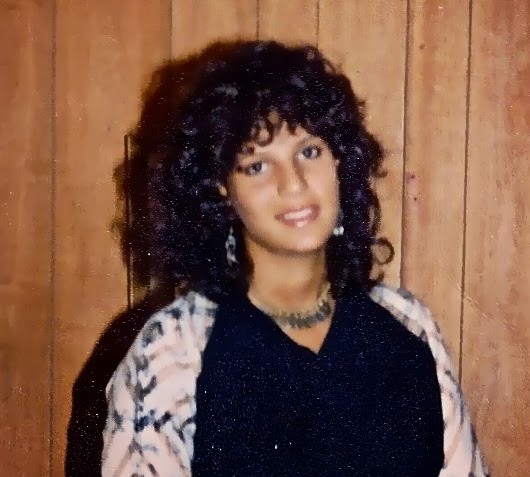
Yup, it's me in my college years. (As promised, Cate!)
And when I was college age and gained more than the freshman fifteen, I was told that I could use to lose about 20 pounds. There was no exploration of the why, no guidance on the how. My mom did instruct me to hold my stomach in, however. I restricted my eating at times, and binged at others. I became rigid about how things were prepared (heaven forbid there was something added that I didn't know about) and I even had a short-lived period as a vegetarian.

Fast forward


Over the years, my own eating normalized. Yes, I realize that's a rather passive statement. I can't quite say how it happened, though, as I never sought help—I never had something one would have known how to label back then. By today's DSM, I'd be labeled a restrictive binge eater.

And then, of course, I became an RD, and after some years, had a family.

Some things will come intuitively--if you let them be.
In spite of my profession, my sons were the least educated of all their classmates in areas of food and nutrition. They didn't know a carb from a fat, and were never taught that they had to finish their 'healthy' food before eating dessert. Ice cream was an acceptable snack—when it was eaten in the kitchen, at the table, no TV in sight. French toast, pancakes and waffles with real maple syrup the norm in our home. They did know that Frosted Flakes was more candy then cereal—and they were tuned in to be critical viewers of the media. It never struck me as problematic when my son had a fuller build, appropriate before his adolescent growth spurt.

In their later years of high school and into college the discussions began. They wanted to know if what they were hearing was true—like whey protein for muscle development? And what’s the story about eating late at night? And are refined carbs as bad as they say?

But really, they already knew the answers. They knew from seeing how we ate that a varied diet was appropriate. And they heard that food was something to be consumed both for fuel and for pleasure. They learned that food was neither to be used as a treat, a reward for good behavior, nor to be withheld as a punishment for bad behavior nor for eating too much. And they had learned to trust their bodies.

And now?


I just spent 4 days on a mini vacation with my husband and my 2 20+year old sons, and what I heard and saw only reaffirms this parenting approach.


I learned that my elder son mixes his cereals at work, where he eats breakfast daily on workdays.  Approximately one third is Frosted Flakes, 2/3 regular Cheerios. Or, there's Kashi Heart to Heart—with a bit of Lucky Charms thrown in—for sugar, or maybe even nostalgia, I suspect. And at our local dairy where the ice cream is oh-so-rich and the portions are crazy large, my almost 6'2” boys order a ‘kiddie’—a single scoop—because it’s just as much as they need.

My adult kids enjoy fine food out—and their share of cheap, quick food—but in moderation. Son #2 would choose fresh blueberries or a fruit laden dessert over chocolate any day. And they’re both as excited about the farm-fresh tomatoes we’ve recently gotten as I am. Meals are eaten at the table—eating in the bedroom or the family room is just not happening—at least when they're home; I can’t speak for what happens in their own space.

They might be momentarily engaged with some texting, but for the most part, meals are mindfully consumed. They talk about the flavors—their preference for one vinegar or oil over another—and they choose foods they enjoy. They are foodies—with all that connotes—but mostly it speaks to their appreciation for how food tastes. Both my sons enjoy eating—and cooking.

As for spouses: I could never have raised my kids as I did if my husband countered my messages with talk of 'good foods' vs 'bad foods'. Or if he told them that they couldn't have seconds. Or if he continually prompted them to eat—even if they weren't hungry.
Most important, talk to your partner so you can be consistent in the message you put out there. And when your spouse isn’t on board, address the issue away from the ears of your children. Arguing around food is the last thing you want to be doing. Food and eating shouldn’t be stressful.

Educate your partner—do they get it? Maybe they have no reason to get it, given little personal experience with a food struggle. Or maybe they are so stuck in their patterns that they aren’t too self aware. Perhaps you can make the connections for them. They just might need some direction.

Remember it's not too late to modify your approach—just be consistent with your message. Focus on health and self care, on listening to and respecting one's body, versus targeting a change in weight.

Hope that helps.


Comments are both welcome and encouraged! Thanks for reading.

Thursday, July 25, 2013

Struggling to Manage Your Weight? Products, packaging and marketing leads to second guessing your eating.


This is a self-serving post. Really, I need to vent; because these things drive me crazy. They’re not directly harmful—except for the laxatives to be addressed in the next post—but they cause you to stumble. They mislead you. They impact your thoughts about what’s healthy and what’s allowed, and they add to your list of should and should nots.

They impact all of us, regardless of our weight. I’m just starting my list, in no special order, but I hope to inspire you to add to it—your comments, your own pet peeves. Because the more you're aware, the less you'll be mislead by the subtle, unreasonable nutrition messages. And the better you'll get at trusting your self and your body.

Almond milk: Forgive me if you are among the food allergic who can’t consume cow’s milk or soy milk. For you, almond milk is a reasonable option as a milk alternative to help meet your calcium need. But with the exception of its higher vitamin E content, it has little merit; it truly falls short as a milk alternative for those who do tolerate milk and soy. Here’s my issue: it short-changes you, because it looks like a glass of milk. But the calories don't compare, nor does the protein.

Sure, almonds, (as they proudly display on their website for Almond Breeze, one brand of almond milk) are high in protein and fiber and low in sugar. But this so-called almond milk? At 1 gram or less of protein, it is 6 or 7 grams less per cup compared to soy or cow’s milk, respectively. And a total of 1 gram of fiber. So please don’t assume that because it’s made from wholesome almonds that almond milk is anywhere near as nutritious.

Gatorade light: Why-oh-why would you choose light Gatorade? If you are consuming this sports drink for the reason it was developed—‘specifically formulated to help you perform your best’ during sports and training, then why have a reduced carbohydrate and low calorie beverage? Did I mention that calories=energy? The calories, from carbohydrate, are a convenient, easy to absorb fuel while exercising. But the light version is hardly worth it, providing minimal fuel to support physical activity.

And for the record, the electrolytes you get from Gatorade—the 160 mgs. sodium and 45 mgs. potassium from the recently increased serving size of 12 (vs. 8) ounces—is no greater than you’d get from a 12 ounce glass of milk (160 mgs. sodium and 560 mgs. potassium). 

Ok, I know you’re not about to drink milk on your run or bike ride. But unless you’re doing long duration exercise, generally more than 90 minutes, there’s little need for a sports drink anyway. You could easily replace your electrolytes when you get home, perhaps with a serving of pretzels and an orange or banana—a more generous replacement for both sodium and potassium losses. Just add any beverage to replace your fluid losses.

Sandwich thins: Made by Arnold and other companies, these seem innocuous, and are perhaps even viewed as a healthy alternative to sliced bread. And, they’re well liked, it seems. (I can't say personally—I've never tried them).

My problem? Eating one is like having just half a sandwich. And unless you are quite short in stature and quite sedentary, you likely need more than a half sandwich for a meal. Yet they look like they should be enough—there are 2 halves—but also half the calories. And, they provide little surface area to add your peanut butter or Vegemite (shout out to my Australian readers) or tuna or whatever. But if you love them and want to include them, have 2 for lunch! Or else when you get hungry later you’ll be beating yourself up thinking you’re not deserving of eating again!

Skinny Cow: I really love these ice cream sandwiches. But do you want to know a little secret? They’re no lighter than most traditional ice cream sandwiches you can buy (at perhaps a lower cost per bar!) But doesn’t Skinny Cow sound so light? All brands I looked at which are a similar size were within 20 calories (higher or lower)—and not promoted as a ‘skinny’ product. I do love their tag line, though: ‘who gives a lick about calories?’

The orange juice aisle: Maybe it’s just in US suburbs, but supermarket shopping is simply an overwhelming experience—even for me. A recent trip to the market revealed more choices than I could ever care to contemplate. Beyond the pulp options, there are orange juices fortified with calcium, and ones with fish oils (can you imagine?). It begs asking ‘Must one food item, this orange juice, meet all of my needs?’ Can’t we have orange juice for its naturally occurring vitamin C, folic acid and potassium? Must I get everything from this single item?

Similarly, must my pasta be protein fortified—or can’t I have chicken with it? Does it need to have added fiber, or won’t my eggplant, artichoke, peppers, etc. add that? Get the point?

Whey protein powder: Some of you who restrict your food intake and those vegans who plan poorly may truly benefit from boosting your protein intake. Why not use whey protein, the refuse, the left over liquid that remains when making cheese, conveniently packaged and sold at top dollar prices at health food stores, supplement sites and health clubs?

Whey protein boosts your calories—so this might be a positive for those of you trying to add some. But a whey protein shake mixed with water, in spite of it’s high protein content falls short as a meal replacement. And let me remind you about food halos. There’s nothing magical about protein. While your body requires protein to fuel your muscles and maximize recovery, from the looks of the label you might be thinking that you need whey more (sorry, couldn't resist) than you do. Even bodybuilders need little more than 1 gram of protein per kg body weight (or .45 gram per pound body weight). 

Are you a non-body builder? Then .8 grams per kg (or .36 g/lb will meet your need. (For most, a daily total of 50 or so grams is adequate.) No doubt you'll see how over the top these whey protein supplements actually are, and not without their risks

Shrinking packages: Why has the portion of yogurt dropped from 8 oz (one cup) to 6 oz, to in some cases 5 plus ounces? And, for the same price? And why did my half-gallon of ice cream slim down in such a deceitful way, denying me the full number of portions it used to have? (It’s now 2 cups short of the old packaging, so if you feared you were plowing through it more rapidly, fear not!) Food manufacturers should not determine what an appropriate portion is, so be sure that you allow yourself to have as much as you truly need. And that's likely to be more than a 100-calorie pack, too!

Packaged nutrients, not foods: Must we be categorizing everything we eat based on nutrient content? Can't we just eat things because we enjoy them? Because they give us pleasure? 'Protein and Fiber'? Really? Looks like sweetened, cluster cereal to me.

I'm just scratching the surface. Gentle laxatives, gelato, bottled waters and other favorites of mine will be addressed in an upcoming post! Please send me your pet peeves, too!


Friday, April 12, 2013

Intuitive Eating is not for you—maybe not just yet, and maybe not ever.


“Have you lost your mind? You, the anti-calorie-counting dietitian, the believer in legalizing all things chocolate and trusting that everything will be okay? Are you suggesting I should start dieting now, or head to the nearest Weight Watchers meeting and start counting points? Or doing the Paleo thing?”

Nothing of the sort! I’m prompted to write this following two experiences I had at the MEDA conference, that wonderful eating disorder conference held in the Boston area this past weekend. And this pertains to those of you with anorexia as well as those struggling with overeating—compulsive or otherwise.

So I was casually walking in the hall after the keynote presentation by Dr. Roberto Olivardia just killing time until the next break when I’d be selling my book. And I overhear two women, representatives from two respectable eating disorder programs chatting up their programs. “We use an intuitive eating approach with our patients”, she stated. “We don’t use meal plans, but instead have them listen to their body…” Ok, anorexic readers and eating disorder professionals, anything strike you as a bit problematic here? Let’s start with a handy, wiki definition:

“Intuitive eating is a nutrition philosophy based on the premise that becoming more attuned to the body's natural hunger signals is a more effective way to attain a healthy weight, rather than keeping track of the amounts of energy and fats in foods. It's a process that is intended to create a healthy relationship with food, mind and body, making it a popular treatment for disordered eating and eating disorders…”

For starters, to learn to be more attuned to your hunger, to begin to trust it, you need to be able to sense it. Most individuals, by the time they make it to see me, no longer really notice their hunger—not if they’re restricting and not if they are frequently binge eating. With the metabolic slowdown characteristic of food restrictors, hunger gets suppressed, and so that handy cue to get you to eat, that signal you’re supposed to be trusting—it’s largely disappeared! And that “healthy relationship with food” which we all aspire to is just not going to happen with all those unhealthy and distorted thoughts about food and eating and your appearance. Further, if you’ve never had a healthy relationship with food—never trusted your hunger because you went from overeating to undereating, it’s mighty challenging to just start trusting yourself. And for good reason, given your past experience with food and self-regulating.

When I shared my opinions (you didn’t expect I’d just casually stroll past, did you?) the program rep agreed, acknowledging that intuitive eating is an approach they address much later in recovery. We both agreed that normalizing eating under someone else’s direction (a dietitian with eating disorder expertise, for instance), needs to happen first, much before an intuitive eating approach. You can’t expect to be an intuitive eater when you can’t discern hunger and fullness, or when the disordered or diet thoughts are so loud that you can’t trust your physical sensations.

But wait, there’s more.


There were two experiences I wanted to share, remember? The second involves the presentation by Dr. Olivardia, mentioned above, who spoke about ADHD and eating disorders. He highlighted that a very high percentage of obese individuals have undiagnosed ADHD, and identified characteristics of this condition that make it oh-so-challenging to just do it, to follow seemingly reasonable nutrition and behavior recommendations.

For instance, impulsivity. Perhaps if you don’t have ADHD it’s challenging, but manageable, to take a break and have an internal discussion about whether or not you really want to be eating the whole package of cookies, to not respond to your impulse to eat. But in those with impulse control, that discussion comes a bit late. If you struggle with this, you may find yourself eating mindlessly before you’ve even gotten to check in with your signals. And if you eat rather fast, as is typical, you’ll take in a lot of extra calories before the signal of fullness has hit.

Then there’s boredom. Are you still with me? Those with ADHD have a much harder time tolerating boredom. If you struggle with sitting with feeling bored, it may be more difficult to simply acknowledge that you’re not hungry and redirect. Eating to manage this boredom might be the action of choice. Not a very intuitive eating supportive choice!

And while we often think those with attention issues as struggling to stay focused, Dr. Olivardia points out that these very individuals also get hyper-focused on the things they are interested in. This can explain the failure to listen to their hunger, perhaps when they are over-focused on other things. By the time they do respond to their physical hunger they may be ravenous, contributing to overeating. Or maybe there’s an OCD component, with a focus on calories and calorie counting, which may stand in the way of responding to physical cues. Again, making intuitive eating quite a challenge.

To be a successful intuitive eater, you need to be mindful of what you are consuming. Not so easy of you have ADHD and your norm is to multitask! My typical recommendations to separate eating from distractions may not be realistic for those living with ADHD, those for whom multitasking is simply the norm.

What now?

For the record, I am a big advocate of intuitive eating and for years have recommended a fabulous book on the subject by RDs Evelyn Tribole and Elyse Resch. Do take a look for more guidance on learning to be an intuitive eater.

Surely it’s not hopeless if you fit the descriptions above. To become a more intuitive eater requires more organization to your eating, including preplanning eating times and even meals. Organizational skills may not come so easy, so use tools like alarm reminders, such as on your phone or computer, and make shopping lists. Arrange eating times with friends or family for greater accountability, too. Utilize simple, easy-to-follow cookbooks, where close-to-immediate gratification occurs (with recipes taking 20 minutes or less, for instance.) Yes, Food to Eat fits the bill! And seek the guidance of an ADHD expert like Olivardia, along with an RD with a behavioral focus.


And please be realistic—and less harsh—if you’re prone to berate yourself for being lazy. There may be good reasons why you’re falling short with your follow-through with intuitive eating.

Thoughts? Comments? I’d love to hear what you’re thinking.

Saturday, August 25, 2012

Time for a Diaper Bag-A New Tool For Recovery

No more siblings for this fella!

No, no more babies in my future--unless I become a grandparent too early in my youth. "Two and through", I just overheard a woman say--I second that sentiment! And I've no need for carrying Depends--a diaper of sorts, for adults. This diaper bag is a bit different and it is as essential for me as for you, male and female alike. It knows no age limits--carry it if you're a teen or in your 60s, a single parent or a mom of little ones. It needs to be carried by you--for you--even if you've got no toddler in tow.

This diaper bag allows you to be in control. It holds the snacks you believe you don't need and don't feel you deserve--and it enables you to eat them whenever you need to. This helps you fuel your body any time, any where--whenever you need to. Intuitive eating becomes possible when you can recognize your hunger and are well-prepared to respond to it. It provides you with the essential pick me up to prevent you from dropping down to an unhealthy state physically--and psychologically. Simply placing your snacks into your sack is a very tangible reminder that you need to eat. But it's just the first step.

Choose a bag size that fits your needs!
"Why eat when I can put it off and wait until my next meal?", you might think. Because if you struggle with out of control eating, eating an adequate snack allows greater control at your next meal. It energizes you to help you think straight. It takes the edge off. It keeps you from dipping too low. It helps keep your thoughts straight and prevents major drops if blood sugar and the lightheadedness which follows.
Your diaper bag is a very visual reminder of  your needs. You tote it around as a reminder that you must eat. Yes, even you who are higher weight or BMI, or of normal weight but simply dissatisfied with your body; you, too, need to be burdened by the bag.

Your diaper bag validates that you need to nourish yourself. Would a mother of toddlers dare to leave the house without this tote? Would she leave behind the infant formula or the animal crackers to appease her child's hunger, to honor it, to respect it? Of course not. So why not consider your needs and provide for your own nourishment?

Yes, it's okay to include a portion of your favorites!
Your nourishment isn't limited to the snacks the bag contains. Your diaper bag may include a book or an ipod, or some other distraction from your own thoughts. Perhaps it even has a journal for you to express yourself and air your thoughts, your feeling, your fears.

Carrying your diaper bag is a way of saying you're important and that self care is a high priority, that your needs are as important as those of your children's or the parents you may care for, or your best friend.

Small, but holds the essentials for men or women.
But it's only as good as what you do with it. You've got to make the effort to dip into the bag and actually eat what you've carried. You've got to pull out the coping tools such as the music player or meditation download, and you need to listen to it. You need to change it's appearance and its contents from time to time, so it's harder to ignore it, to forget why you carry it.

Design your own bag or use a simple sack of your choice. But make it all about your needs with the tools to meet them. I know, I know, it's not going to be easy. You've never thought of yourself as number one on the priority list. But it's time for change, isn't it? And if you can't seem to get past doing it for yourself, consider starting by doing it for the sake of those loved ones you care about--your kids, your partner, your parents, your friends.

Please tell us what you've put in your bag. Or how you've created one and used it. See this post for inspiration http://keepcatebusy.blogspot.com/2012/08/i-made-something-messenger-bag.html

Thanks, in advance, for sharing.


Friday, June 29, 2012

Lessons from the Ride: Tales of Intuitive Eating, Anxiety and Mindlessness.


Tell me this isn't great?
Let me preface this post by saying that I’m no exercise fanatic. I like to work out—it makes me feel good—but if I don’t get the chance to, I’m not bent out of shape.  I’ve never been much of an athlete. No need for tears, but in elementary school I recall being one of the last ones chosen for teams. I’m over it now, though, really. It was not until my diagnosis of MS, Multiple Sclerosis that I began to regularly bike ride although I’d done my share of hiking. This past weekend marks my 10-year anniversary riding this 2-day fundraising ride, a total of 156 miles from Boston, Massachusetts to the tip of Cape Cod—Provincetown.

During the ride thoughts of blogging never entered my mind. But afterwards, I was struck by several observations that I just had to share.

Intuitive eating? Not quite

As you’re well aware, I’m a big advocate of intuitive eating. But the truth is, intuitive doesn’t always work. Case in point: I’d ridden 15 miles to the first rest stop, soaking wet from the rain, with an elevated heart rate. Was I hungry? Not at all. Did I need to eat? Perhaps. By the next rest stop, now more than a couple of hours from the start of the ride, I still wasn’t hungry. Perhaps it’s because of the volume of fluid I was drinking in an effort to stay well hydrated. Perhaps it was the adrenaline driving me, revving me forward, preventing me from being aware of my body’s need for fuel.

Just arrived at the lunch stop
Nonetheless, intellectually I knew I needed to eat. I knew that my body was using up energy and needed replenishing. And so I made myself eat. I had little interest in the sports bars nor in the cookies at the rest stops, but I ate them. And they successfully fueled me until the lunch stop just an hour later. Then I fed myself a sandwich and multiple bags of chips, along with assorted other snacks. Oh, and more Gatorade.

This is how it went for each of the two days. There were times I did get hungry—generally after I had cooled off and my heart rate had dropped. But for the most part, I had to just do it, to simply eat because I knew I needed to, to keep me safe while doing an activity that needed fueling. And even without exercise, we need to eat to fuel ourselves throughout the day.

Intuitive eating returns

By late Sunday night, I returned home, and at 9:30 PM, after consuming more complete meals and smaller snacks than I can even recall, I was starving! So what’s a girl to do? I ordered Chinese food—the sodium-rich cuisine was just what I felt like— and I enjoyed every bit. This was intuitive! Yet had I, like so many of you, been stuck with the misinformation that eating after a certain hour was bad, or that I had already eaten my umpteenth meal and shouldn’t be hungry, I would have failed to meet my body’s needs.

My husband, who also rode, was also quite intrigued by the regulation of his food intake. He asked me how much I thought we had each consumed and I did a very rough estimate of our intake—trying very hard to remember all we had eaten. Then he asked how much I thought we had burned. So I did some equally estimated calculations for our expenditure.

And what did I find? Each of us had consumed within 10-15 calories of our estimated need! It was astounding! This combination of eating at regular intervals—just because I knew I should—together with eating whenever I got hungry worked like a dream. Our high activity is really beside the point. The key thing is that you burn calories 24/7—and certainly more if you are moving or exercising. And it’s critical to both respect your hunger when it is present, and use your sensibility (or the wisdom of a professional who’s working to keep you on target)—because anxiety, exercise, distraction, fluids, fiber and volume of food can stand in your way from eating enough.

Other lessons from the ride

Anticipatory anxiety

Yes, it's raining!
I hate the thought of biking in the rain. It scares me. They threatened precipitation for Saturday, but that did little to reduce my fear of having to ride in bad weather. About 45 minutes before we started pedaling, the rain started. Steady rain. The ride was not called off. The teams were called, one by one, to head out to the road. And so I did. 


Yes, my eyes were stinging from my hair gel dripping into them, and I was getting covered with grit and spray from the bike in front of me, but you know what? The reality was much better than my fears. Would I choose to ride in pouring rain? No! But having had to do it, truth is, it’s really not too bad. I survived, as did everyone of the 2000 or so riders that rode. And after a couple of hours, the sun came out, and I dried off. And by the end of the 156 miles, I was so thrilled I didn’t allow my anxiety to stop me from achieving my goal. See where I’m going with this?

Sometimes the solution is right in front of you!

Ok, this brilliance I’ll share—just don’t think any less of me, please!

At the finish, not yet hungry, but quite tired!
I had a headache all Saturday morning, a painful, aching headache. I didn’t get it—I was drinking plenty and eating regularly, so go figure. Then lunchtime came, and I pulled off my bike gloves, and my helmet and ate. And the headache disappeared. Yet when I returned to the road, the pain returned.  Thoughts of stroke and aneurysm crossed my mind—really! But by the next rest stop I figured it out.

The indentation on my forehead told me that I had mindlessly secured the darn helmet way too tight!  Yes, sometime the solutions are really right in front of you. And sometimes, your symptoms have nothing to do with how much you had eaten! (Just being honest!)


Yes, that’s what I learned from my ride last weekend. Thoughts? Comments? I’d love to hear what you’re thinking (unless, of course, you respond to my inability to appropriately fasten a bike helmet!)